Exploring Movement with the SpineFitter®
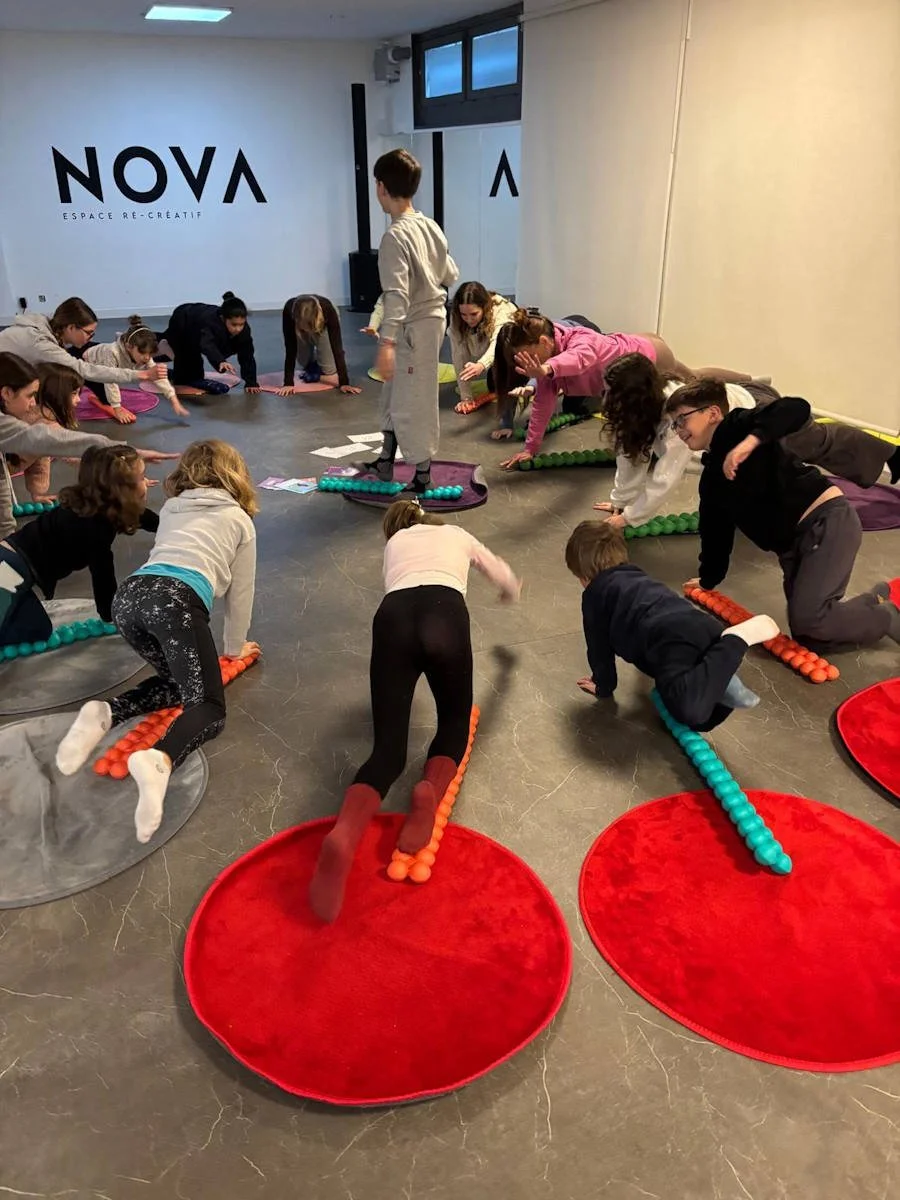
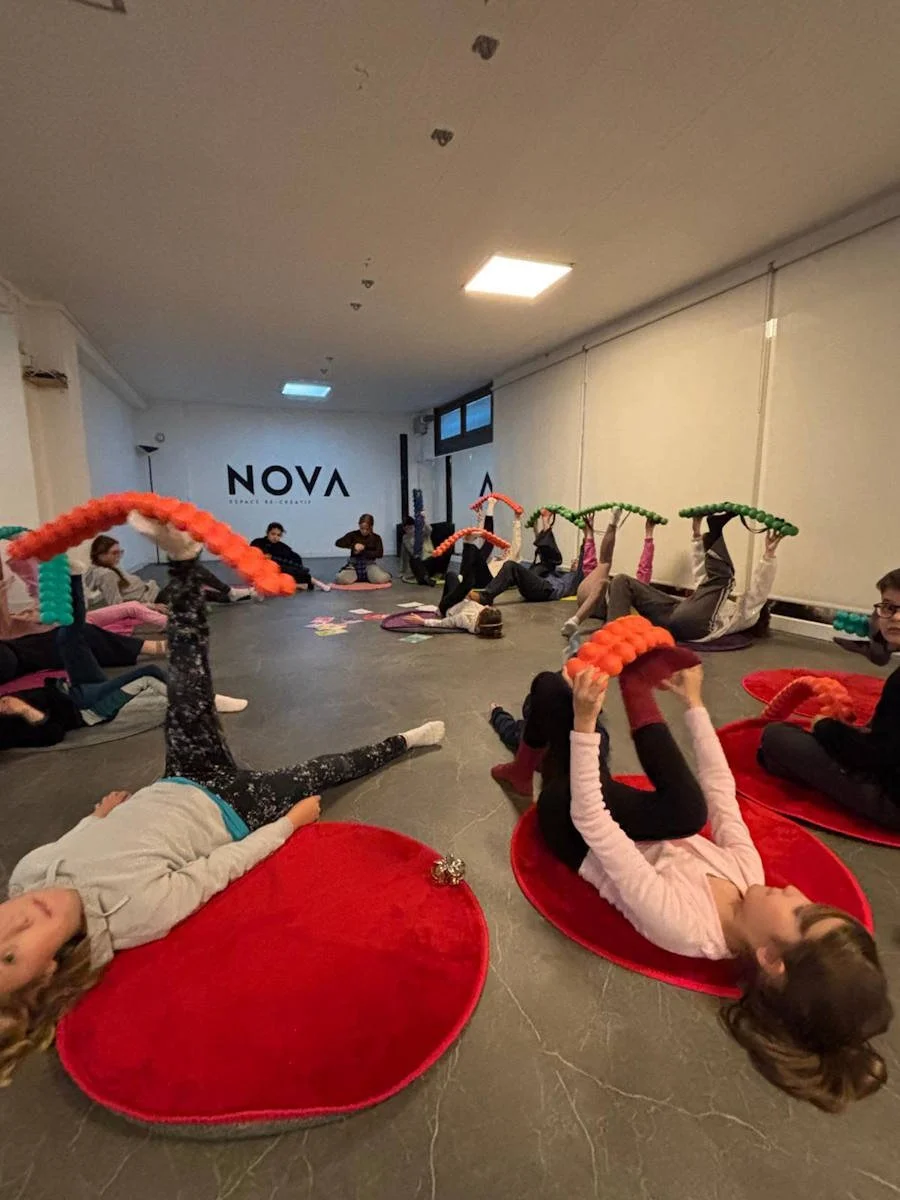
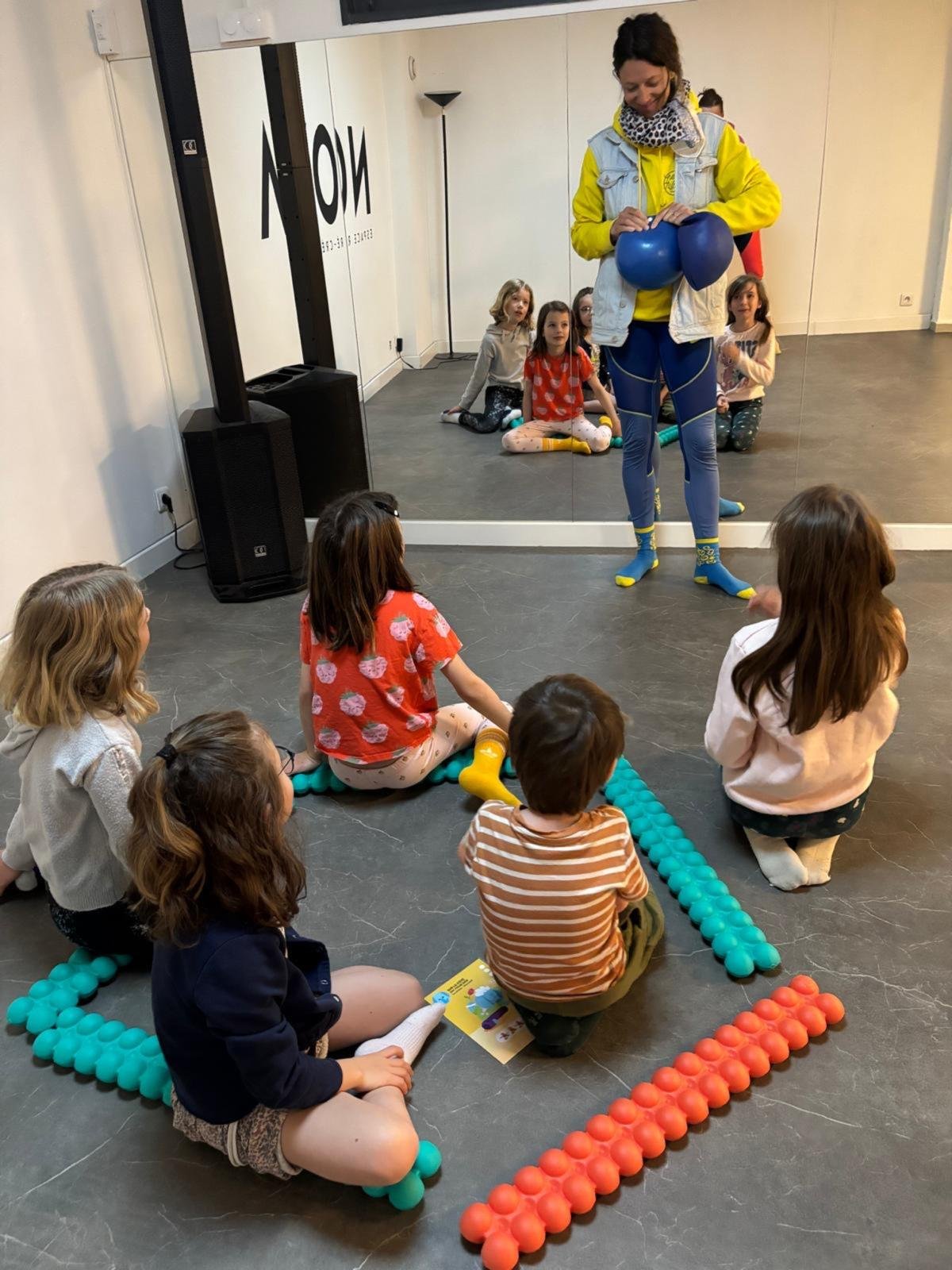
Originally developed in Germany, the SpineFitter® was co-invented by Nina Metternich, Head of the SISSEL® Academy, physiotherapist, osteopath, and Pilates educator. It was designed to support spinal mobility, muscle relaxation, and nervous system stimulation. Made of two rows of connected spheres, it naturally follows the shape of the spine and provides deep sensory feedback.
During the Easter holidays, we conducted a unique pedagogical experience in partnership with Sissel Performance Health, centered around this still relatively unknown tool. With both junior and adult versions available, we designed a five-day immersive camp bringing together children and teenagers to explore movement and the spine.
This exploration was also extended into a school environment, through a dedicated workshop day in a middle school with students aged 11 to 14, confirming the relevance and adaptability of the SpineFitter® in educational settings.
From the very first interaction, the object sparked curiosity. Some children saw it as a giant pearl necklace, others as an egg box or a playful version of a spine. Very quickly, sensations emerged and reactions were immediate: “it presses,” “it tickles,” “it’s uncomfortable,” “it feels great.” The body became a rich field of exploration.
Beyond these initial impressions, participants discovered acupressure points, sensory receptors, and the connections between sensation, posture, and movement. While originally intended for adult use, the SpineFitter® proved to be a powerful tool for enhancing body awareness and regulating the nervous system in younger populations.
Throughout the camp, the SpineFitter® was fully integrated into the Petit Pilates® Method. Each day followed a natural progression: discovering, feeling, experimenting, structuring, and creating. Children explored body support, alignment, balance, and coordination, gradually building their ability to sequence movements.
The SpineFitter® became a guide, helping them understand alignment between the head, rib cage, and pelvis, while supporting different movement qualities such as length, roundness, spirals, and controlled imbalance. Exploration evolved from individual work to partner and group activities through games, challenges, and structured pathways.
Children moved through environments built with SpineFitters®, arranged in lines, zigzags, and geometric shapes, creating playful and engaging spaces. They explored coordination, balance, and movement creativity, often using Petit Pilates® cards and additional equipment.
One of the highlights was the integration of the SpineFitter® into aerial hammock work, connecting ground-based sensory input with suspended proprioception. This combination enriched body awareness in space, between stability and lightness.
Over time, children and teenagers became more autonomous, creating their own movement sequences and working collaboratively. This approach fostered creativity, confidence, and ownership of their movement.
This experience, conducted with children aged 4 to 10 and teenagers, and extended into a school setting, confirms the value of a pedagogy based on exploration, sensation, and play. It reflects the core philosophy of the Petit Pilates® Method: learning through experience, understanding through sensation, and building a confident relationship with the body.